Monday, 7 February 2022

Which Biosafety Cabinet type is right for you?


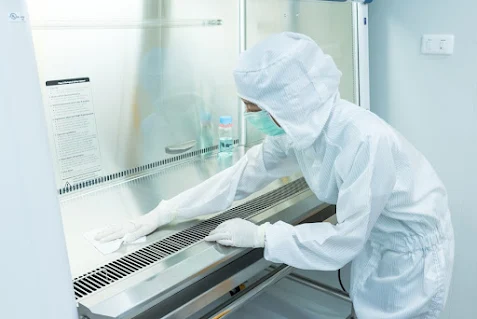
Biosafety Cabinet (BSC) is a laboratory-controlled lab-engineered enclosure that protects samples, lab workers, and the laboratory environment against exposure and biohazards, splashes, and aerosols. The chances of material splashes and aerosols arise from material handling and manipulation of highly communicable agents. It is necessary to periodically check the efficiency of safety cabinets to verify the airflow, HEPA integrity, and how well the instrument is being able to protect the sample stored inside the chamber. All these factors depend on the cabinet in use.

The Biological safety cabinet comes in three classes. Class I cabinets, Class II cabinets, and Class III cabinets. Let's go through a quick review of what each entails.

Class I cabinet

This is a simple cabinet that provides personnel and environmental safety. However, in this type of cabinet, the product is subject to contamination. The airflow suctioned inside the cabinet is discharged through the HEPA filters.

Class II cabinet

This ventilated cabinet provides both personnel, environmental, and product safety. Found in research and clinical labs this is ideal for labs that deal with infectious agents. This cabinet is further divided into four three risk groups. A1, A2, B1, B2 are the different types of class II cabinets that are differentiated by the ratio of their exhaust and air recirculation.

Class III Cabinets

This cabinet provides the highest level of safety and is used extensively for protecting the most transmissible agents. These cabinets are used in Level 3 and 4 laboratories. These are completely enclosed cabinets that are leak proof, with HEPA filtered air. The operator's access is provided using glove boxes that enable work in the enclosed workspace. Dedicated exhaust system exterior maintains an interior negative pressure.

Conclusion

Providing the most technologically advanced Biosafety Cabinet iGenge labserve brings the most advanced laboratory equipment that increases lab experiment success and opens scope to major and delicate investigations in the field of bioscience. To explore our product brochure visit https://www.igenels.com/

Monday, 24 January 2022

Ultra Low Temperature Freezer - Technical Specifications


Temperature Range - -40°C to -86°C
Ambient temperature - 16°C to 32°C
Controller - 7 inch touch screen / Password protection / Intuitive display
Display accuracy - 0.1°C
Data storage - USB data storage facility
Sensor - PT100
Internal chamber - 304 stainless steel
Insulation thickness - 130 mm
Refrigerant - CFC free mixture gas / 600
Power supply - 220 Volts 50Hz

Saturday, 22 January 2022

What should a standards Biosafety Cabinet assure?


The risk of contracting diseases among lab workers is quite high as they deal with biologically hazardous infections causing viruses and bacteria. The risk of disease is 8,000 times higher in lab technicians, especially when dealing with highly sensitive communicable diseases. It is imperative to provide a safe working enclosed cabinet where they can work with safety. The Biosafety Cabinet serve this purpose and safeguard the technician from exposure to harmful and disease-causing microorganisms.

Guarding lab workers against biohazardous particles, labs dealing with such materials must have a biosafety cabinet installed in their laboratory immediately if they already do not have one. While working on highly transmissible particles they should wear proper PPE (personal protective equipment) for no exposure to these particles.

What are the three classes of BSC?

BSC come in three classes, Class I, Class II and Class III cabinets. All three perform a common function of protecting the sample enclosed within the cabinet. Let us understand each’s function in detail.

Class I

This BSC features a sash which is the window and the only connection that the investigator has with the samples inside the cabinet. As soon as the sash is parted an inward surge of air blows into the cabinet to prevent aerosol movement of the particles outside through negative pressure. This air movement protects the person and the surrounding environment of the lab. However, the sample inside the cabinet may be contaminated by the inward unfiltered air circulation. 

Class II 

This cabinet solves the problem faced by the first cabinet. Through a double directional airflow, it creates an air barrier between the lab and the sample. The shield prevents the outside air to reach the sample. The air maintains a downward flow within the cabinet from the drawn-in air which is sucked by the HEPS filters. This cabinet is further classified in type A1, A2, B1 or B2 cabinets depending on their air circulation systems, and air exhaust designs.

It should be noted that both Class I and II are prone to disruption and should be placed close to open windows and in secluded lab areas.

Class III 

This is a fully closed cabinet with only glove port inlets. The ports allow work inside the cabinet. An interlocking door at the side of the work area allows the transfer of materials. The air streaming works just like the class II cabinet system protecting the aerosol transfer of transmissible microorganisms, the air is efficiently exhausted by the HEPA filters.

Conclusion

If you are looking for the best-in-class Biosafety cabinets then iGeneLabserve is a company that you can safely choose for high in technology laboratory equipment. Creating safe working environments for lab workers and at the same time making scientific findings possible their instruments are of international quality. Visit https://www.igenels.com/ to view their product portfolio and place your order.

Wednesday, 19 January 2022

When do you need Laboratory Fume Hoods?


When dealing with highly communicable lab samples that demand ventilated enclosure laboratory fume hoods is the most useful equipment. It separates sensitive contaminated samples with a different ventilation and air conditioning system not related to the building’s HVAC system preventing the recirculation of the air back into the building.

When you are working on toxic compounds and compounds with a boiling point below 120 degrees Celsius, laboratory fume hoods are a must. These are effective local ventilation equipment that controls exposure to materials through enclosed lab conditions.

Fume food controls include 

Constant air volume (CAV)

Variable air volume (VAV)

Two state (two speed) control

In the older versions of fume hoods, fume cupboards can still be found.

Fume hoods are grouped into two categories.

The first category belongs to the low standard flow fume food that is designed to operate at 100 linear feet per minute. These maintain an 18 inches sash height.

What should you know when using a fume hood?

There is a possibility of exposure and air contaminants generated by laboratory activity. In such a situation a fume hood rather than a benchtop is more reliable in avoiding any sort of overexposure and keeping your surroundings guarded against highly sensitive materials avoiding room contamination. When there is a requirement for service or repair, lab researchers and personnel should supervise the decontamination of the fuel food and ensure that the ventilation system is shut down. When the room ventilation system is shut down, the fume food must not be used.

What needs to be kept in mind when installing and replacing fume hoods?

When installing a fume hood, you need to follow a design and planning which includes, decontamination, asbestos abatement, and many such pre-installation activities that make the installation process safe and effective. You may need the help of a technician from the company to assist you with the installation of the hood system. When purchasing your hood from iGeneLabserve, https://www.igenels.com/ you will find complete assistance from the team to install your equipment. Connect today.

Monday, 10 January 2022

Procedure and uses of the gel documentation system


Gel documentation system uses ethidium bromide, a fluorescent substance bound to nucleic acid. The ultraviolet rays excite fluorescent light. Binding itself to the nucleic acid the fluorescent substance concentration depends on the molecular weight of the nucleic acid. luminosity is larger in molecules that have more weight. All large samples will shine out conversely smaller substances show a tiny quantity of fluorescence.

when a double-strand DNA is bound by ethidium bromide, the structure displays hydrophobic rings present in DNA. Close van der Waals interactions are formed with the base pair and untwist the helix. The principle of using ethidium bromide as a transilluminator through the technique of agarose gel electrophoresis shows protein and nucleic acids.

In genetic engineering, the use of ethidium bromide helps in detecting nucleic acids in microbiology labs with Gel documentation system. The system helps in detecting single-strand RNA and double-strand DNA from PCR restriction digest. The detection process involves a gel containing nucleic acids under UV lights. The rays are harmful to the eyes and skin. Ethidium bromide acts as a mutagen based on the time of exposure. Viewed indirectly through enclosed cameras and images capturing fluorescent photographs on computer screens. For direct viewing, adequate protection with glasses and skin protection must be worn.

iGeneLabserve’s gel doc system is highly efficient in detecting protein and nucleic acids in DNAs and RNAs. The protection and caution instructions are served with the equipment manual. Visit https://www.igenels.com/ for details.

Thursday, 6 January 2022

WHAT IS IGENE LABSERVE’S OUTLOOK?


We have established ourselves under the name of iGeneLabserve Pvt. Ltd. to supply best quality appliances for diverse purposes. With a prolific team who has years of industry expertise in producing variety of scientific laboratory instruments.

Wednesday, 29 December 2021

PCR machine application and principle

The principle of the Polymerase chain reaction PCR machine is based on DNA polymerase in vitro replication of specific DNA sequences. This is a way of generating multiple DNA sequences of a specific strain. The DNA strain can be replicated selectively through a large amplification process. The PCR technique enables the purification and cloning of specific DNA. The matrix DNA out of scope of interest will not be varied. The single of the selected DNA is amplified from a combination of other sequences.

Where is PCR applied?

The PCR technique is indispensable in cellular and molecular biology. The “acellular cloning”, in a few hours through automated processing is invaluable compared to the standard processing of molecular cloning that easily takes days to happen. The PCR has proved to be highly useful in diagnostic purposes as it easily identifies the exact DNA sequence of organisms in biological fluids required for the study. It also helps in genetic fingerprinting for judicial inquiries. Botanists and zoologists can identify plant and animal varieties, food quality testing is also done through a PCR. For characterization and conservation of the vast genetic diversity, the sequence of the genome is important for livestock breeds, the measurement of polymorphisms scattered at loci through the genome, the study of large-scale gene transcription at a complex biological scale, and molecular technology with integrated interdisciplinary skills.

How does the PCR work?

A reactive mixture that includes Taq polymerase, the primers, and the four along with an excess solution of deoxyribonucleoside triphosphates (dNTPs) for buffer carry out the polymerase chain reaction.

The tubes are filled with the reactive mixture. They are made to pass through thermal cycler heating blocks of repetitive temperature multiple times.

The enclosed apparatus holding the sample tubes experiences quick temperature variations from 0 to 100°C. A single cycle includes three periods within tens of seconds and the process is further broken into three steps.

Denaturation is where two strands of the DNA are separated with an increase in temperature at 94°C. The DNA matrix is denatured at this temperature. The hydrogen bonds no longer exist when the temperature exceeds 80°C, the double DNA strands are denatured to a single strand.

Hybridization is performed between 40 and 70°C. When the temperature is decreased hydrogen bonds return to their complimentary stands known as primer hybridization. The short strand sequence that is within the aspect of amplification can hybridize easily compared to those with long stands matrix DNA. Hybridization becomes selective and specific at a higher temperature.

Elongation is the third period that occurs at a temperature of 72°C where a combination of complementary strands is bound by Taq polymerase to the primed single-stranded DNAs using deoxyribonucleoside triphosphates in the reaction mixture catalyzing replication. Selective synthesis takes place, synthesized fragments in the previous cycle are matrix after the predominant strain amplifies corresponding to the DNA where the primers hybridize. After 20–40 cycles an analyzable DNA strain is synthesized. The doubling of the interest of a large sequence is extremely rapid and happens within a short duration.

Why invest in iGeneLabserve PCR Machine?

The iGene PCR workstation works with quality HEPA and prefilters. The air filter systems enable work efficiency up to 95%. The work area can be managed easily with a stainless-steel workbench with standard electric fittings and fluorescent lamps. Manual sliding door sashes cover the front part made of acrylic plastic. To know more about iGeneLabserve products, visit the website https://www.igenels.com/.

Wednesday, 22 December 2021

Analytical Equipment by Igene Labserve


A wide range of equipment that analyze samples qualitatively and quantitatively through chemical, clinical and environmental testing for study that includes, not limit to forensic, Life Science Research (e.g., metabolomics, genomics, proteomics), material research and characterization, petrochemical analysis.

Monday, 13 December 2021

An Overview of a Laminar Air Flow


Laminar Air Flow is an enclosed HEPA (high-efficiency particulate air) chamber with a filtered airflow system. Circulating unidirectional air, the chamber has nil turbulence maintaining a uniform velocity of around 0.3-0.5 m/s. Laboratories extensively use this equipment for maintaining a contamination-free environment in the workspace.

Let us look at its working

Laminar airflow can be either vertical or horizontal. The airflow system filters the air that moves within the defined space following uniform velocity and a particular direction.

How should you use the system?

Wipe the laminar airflow chamber. Sterilize the workstation surface by closing the workstation glass shield. Run the UV light for 15 minutes. The blower should be switched on for around 5 minutes before operation.

After sterilization open the sash and turns the fluorescent light.

Your chamber is ready for you to start with your experiments.

The principal function of the system is to eliminate all airborne contaminants ensuring that a sterile atmosphere is maintained. In microbiological studies, this equipment plays a very significant role in keeping the workstation aseptic.

After the air filter, the next most important component of the system is the air pad and fan that are critical for its working. The prefiltered air is suctioned by the fan/blower out of the filter pads that encapsulate the contaminants. This prefiltered air residual is made to pass through a high-efficiency particulate air filter that separates the contaminants. This can include fungus, spores, bacteria, and dust particles. Leaving behind a sterile environment in the work area where the air continues to maintain a uniform speed and direction.

Parts of the laminar airflow system

The enclosed cabinet system provides contamination-free air within the stainless-steel structure. The sterility inside the chamber is well protected from contamination outside. The glass sash is a sliding front door manually operated by users allowing you to open the window to the desired height that would be most convenient for the user to work within. Users can provide different operations and keep the culture plates, biological samples, blower, and materials inside with safety.

The filter pad comprises the primary filter or the pre-filter which sucks the room air. Placed on the top of the system, if the system is a vertical cabinet and at the bottom, if the cabinet is horizontal. In both cases, the filter pads trap room contaminants higher than or equal to 5 microns.

The function of the blower/fan is to draw the prefiltered air and send it in the direction of the HEPA filters. The blower is placed below the filter pad in the vertical system and next to the filter pads in a horizontal system.  

The HEPA filters can eliminate 0.3 microns particulates offering 99.9% efficiency and this is the final filtration that makes the condition sterile for safe operation.

The chamber is further sterilized with UV germicidal lamps which makes the Petri lamps, test tubes, cultures contamination-free. The UV lamp should be turned on 15 minutes before operation and switched off before work.

Why select iGenelabserve Laminar Air Flow

For the safest and contamination-free workspace select the minimal turbulence system. The airflow velocity is controlled within 0.4 m/s to 0.6 m/s. A bacteria-free working environment preserving the samples within the chamber will help you to carry out your experiments. You can contact https://www.igenels.com/ for further details.

Tuesday, 7 December 2021

Molecular Biology Equipment - Igene Labserve


Instruments designed for microbe free working environment for specialized work responding to high resolution and sensitive scientific conditions. Increases experimental efficiency by eliminating complications in the operation process. Excellent temperature uniformity & accurate annealing for experimental requirements.

https://www.igenels.com/product-category/molecular-biology/

Microbiology and Molecular Biology Lab Equipment Checklist for New Labs

Setting up a new laboratory involves more than purchasing instruments and arranging them on benches. The equipment needs to match the labora...